Posts

Showing posts with the label transmission

Storage/Transmission Networks - Part I: Challenges for Europes Energy Future
Storage May Become an Important Part of Europe’s Plan to Integrate Regional
Grids - a status note -

Image
reprint European energy storage developers have until the end of this month to submit proposals for projects in a new 10-year transmission system operators plan. But the minimum requirements imposed by the European Network of Transmission System Operators for Electricity (ENTSO-E) mean that only a small number of projects might be eligible. _progress | M replaces _kt75 | mirror. visit: http://progress-m.blogspot.com . ready: 01.07.2015. close ✕ ENTSO-E, which represents 41 system operators in Europe, announced the search for energy storage plants at the end of last month as part of a 10-year network development plan. The plan, updated every two years, acts as the basis for a list of so-called "projects of common interest" to better integrate the grid across the European Union. To be eligible for inclusion, a project has to be at least partially located in one of the 34 countries represented within ENTSO-E, and needs to have a minimum 225-megawatt installed cap...

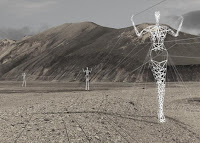
When the wind doesn't blow and the sun doesn't shine...

Image
-- a _kt75 | reprint Download: Quarterly Notes on Sustainable Water Management - Q01/2014 There is a boom in renewable energy sources coming online worldwide, but the predominant types – solar and wind – are problematic due to their variable nature. For most regions of the world, the sun cannot be expected to shine nor the wind blow when required. What is needed is a way to capture that energy when available, perhaps in the middle of the night, when demand is low, and then store it until it can be used when demand rises. But this is not a trivial problem to solve. _progress | M replaces _kt75 | mirror. visit: http://progress-m.blogspot.com . ready: 01.07.2015. close ✕ According to the European Wind Energy Association , at the end of 2013, the UK had 10.5GW of wind turbine capacity installed, with more in planning and construction. As the percentage of energy generated from renewables increases, the intermittency problem becomes more acute, as has been ...

Big 'n' small: can micro-grid based renewables guarantee sustainable energy supply?
An Australian experience.

Image
-- a _kt75 | reprint Download: Quarterly Notes on Sustainable Water Management - Q01/2014 When Ergon Energy began a Solar Cities program on Magnetic Island to try to make the isolated community as efficient and self sustaining as possible – and avoid an expensive new cable to the mainland grid – one of the first things it did was to remove all the old bar fridges. It filled up more than a shipping container and took them off the island. Bar fridges, explains Ergon Energy CEO Ian McLeod, are usually old, and terribly inefficient. Roofs on the island were also painted white to dissipate the effects of the sun’s heat on household interiors. Solar was installed and the new cable deferred for nearly a decade. Now, with storage about to be installed on Magnetic Island, the new cable will probably never be needed. This is now becoming the model for regional and isolated communities around Australia . Inefficient appliances like old bar fridges are being replaced, local gene...

Lost in Transmission:
Alternative Energy is there. Where is the Alternative Energy?

Image
-- a _kt75 | reprint   Tweet   Renewable energy sources, at least wind and solar, are variable — the wind isn’t always blowing, the sun isn’t always shining. This is something every glib pundit on the internet cites as a reason we’ll need fossil-fuel or nuclear “baseload” power plants for the foreseeable future. It’s a frustrating topic, since people who actually study the subject (like NREL) have shown that there are all sorts of ways to handle variability without disrupting the grid. One of those ways is transmission : building power lines to take renewable energy from where it is abundant (often remote areas) to where it is needed (mainly big cities). More specifically, the idea is to build high-voltage direct-current (HVDC) lines that would carry energy over long distances from remote sites and feed it into the alternating-current (AC) lines that serve urban areas. (The DC vs. AC question is interesting, but not particularly essential...