Posts

Showing posts with the label iran

The Iranian Water Crisis: A Strategic Analysis

Image
-- a _kt75 | reprint Download: Quarterly Notes on Sustainable Water Management - Q02/2014 . Abstract In 2013 faced with a critical shortage of water, the Iranian government called for water conservation and greater water use efficiency nation-wide. Despite imminent shortages , water use in Iran remains inefficient, with domestic use 70 per cent higher than the global average. Iran has a national population of 75 million people, 12 million of whom reside in the capital; demand for water is rapidly increasing, even as major lakes and groundwater resources begin to shrink. Population growth, more frequent droughts and the effects of climate change are creating the ‘perfect storm’ for future water insecurity. We are left with the question, are the proposed changes too little, too late? Paper (abbrev.) Security in the Middle East continues to focus on the political and geostrategic priorities of regional states, but a greater challenge has now presented itself, in the for...

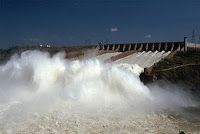
Water-Shortage Crisis Escalating in the Tigris-Euphrates Basin

Image
-- a _kt75 | reprint    Follow @_kt75 Key Points ■ Since 1975, Turkey’s extensive dam and hydropower construction has reportedly reduced water flows into Iraq and Syria by approximately 80 per cent and 40 per cent respectively. ■ Approximately 90 per cent of the water flow in the Euphrates and 50 per cent in the Tigris originate in Turkey. ■ Low flow rates in Iraq have allowed salt water to infiltrate nearly 150km inland from the Persian Gulf. ■ Lack of international agreement is hampering progress on a deal between Turkey, Iraq and Syria. ■ Turkey has accused Iraq of poor water management practices, which, it says, are exacerbating Iraq’s water crisis. Tensions between these countries remain high because of the issue of water management. Summary The Tigris and Euphrates Rivers, originating in Turkey and cutting through both Syria and Iraq, have experienced drastic reductions in water flows in recent years due, primarily, to Turkish hydro-engineering ...

Iran Abandons Chinese Help, to Build World’s Highest Hydroelectric Plant Alone

Image
-- a _kt75 | reprint    Iran, pummeled by years of international sanctions, has had two energy goals. First, to preserve its dwindling international hydrocarbon market share, increasingly battered by years of U.S. and UN sanctions designed to slow down and halt its civilian nuclear energy program, which Washington and Tel Aviv have long insisted masks a covert program to develop a nuclear weapons program. The second, much less reported in the foreign press, is to diversify its indigenous energy infrastructure, so as to preserve its hydrocarbon assets for the long term. In pursuit of the latter goal, Iran is ramping up its hydroelectric program. Iran currently has 23 operational hydropower plants, with a combined electricity generating capacity of 8.2 gigawatts, 14 percent of the nation’s total generating capacity of 58.5 gigawatts. A further 4.8 gigawatts of capacity is under construction, with 12.7 gigawatts of hydro capacity is either u...